Things to See & Do in Tortola
Tortola is only about 12 miles long, so you do not need to change hotels to see it. These are the stretches I plan around.
The north shore
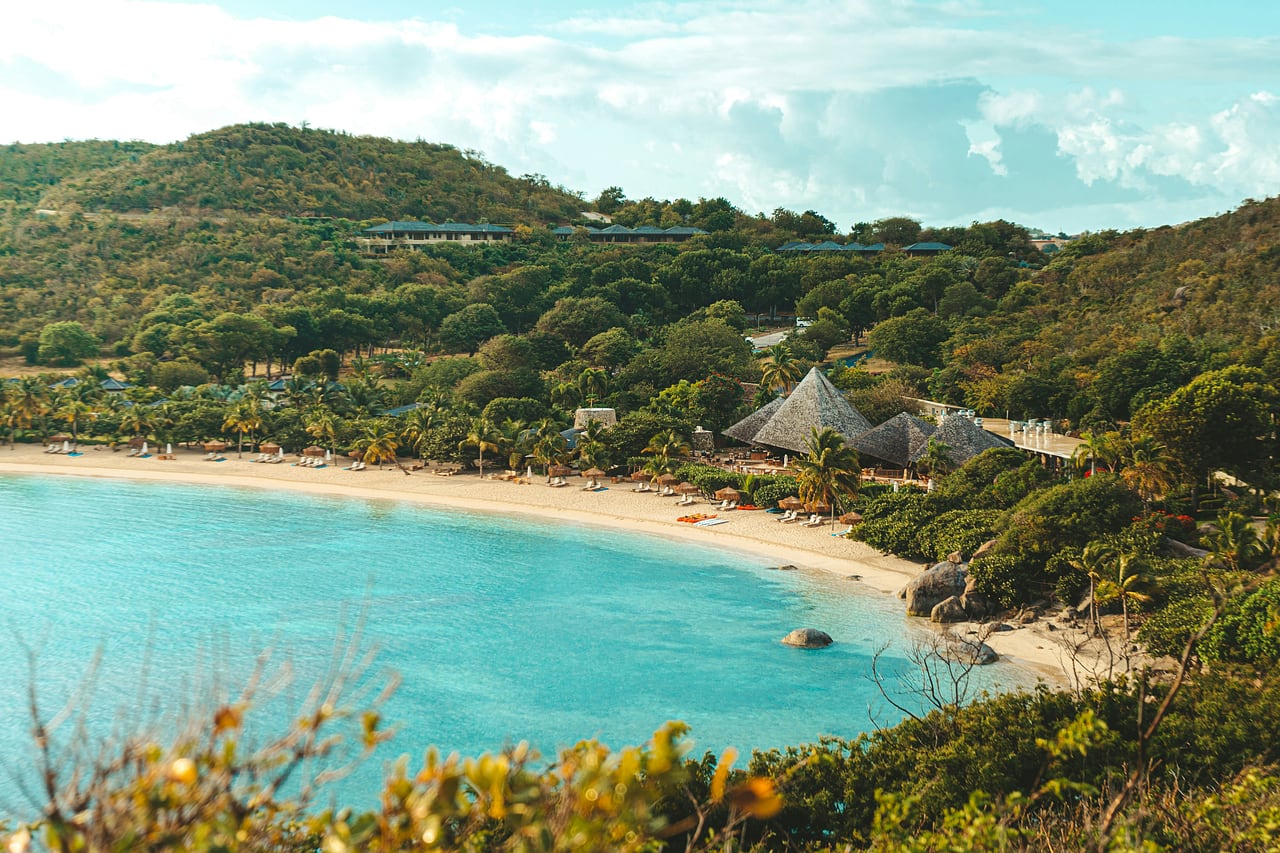
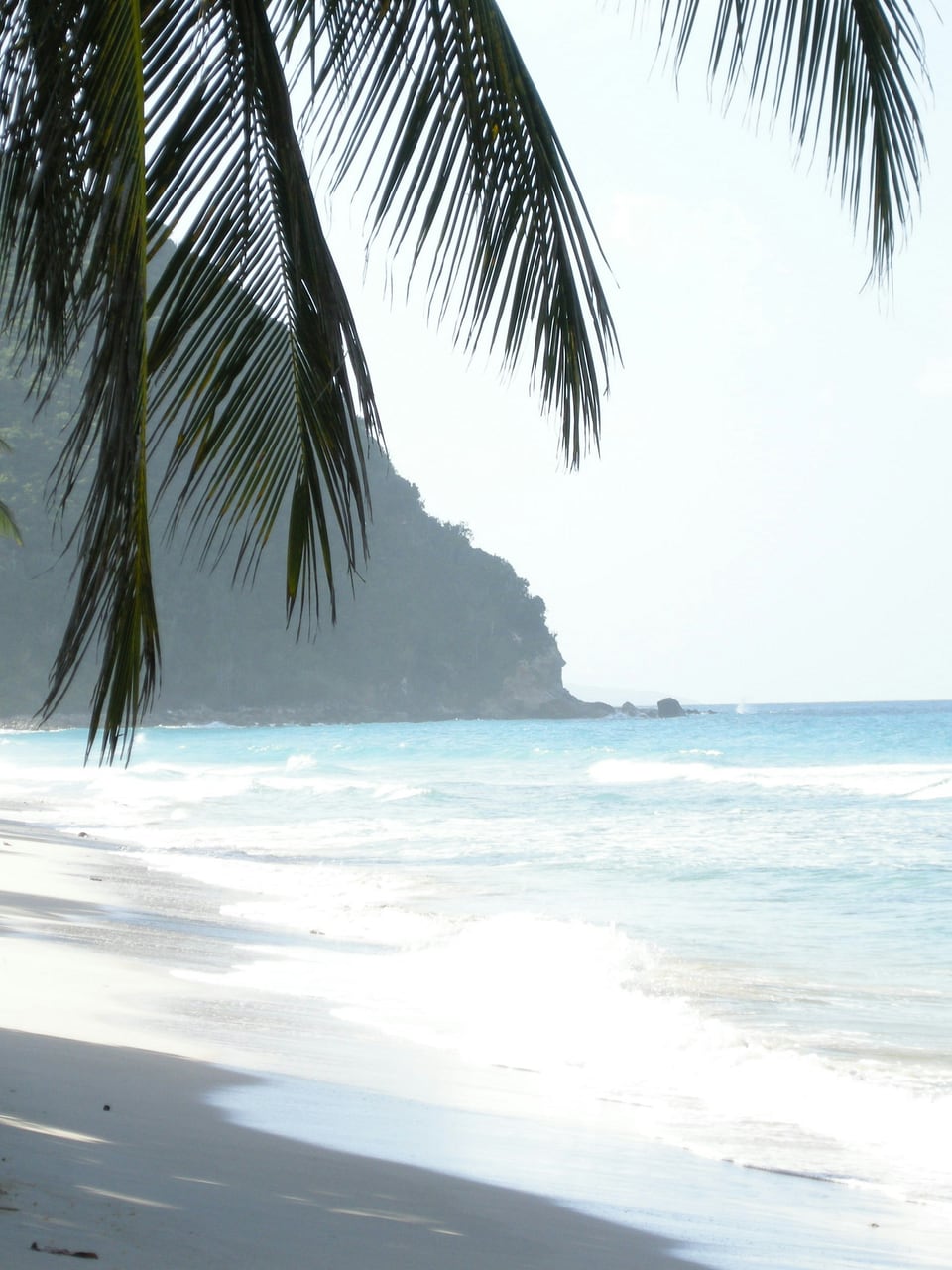
Cane Garden Bay is the beach most people mean when they picture Tortola: a crescent of sand, a village behind it, and hills close around the water. Apple Bay and Long Bay sit farther west and take more of the Atlantic swell. Brewers Bay and Josiah’s Bay are quieter coves on the same north coast, and Smuggler’s Cove is the northwest corner.
They are close enough to share one base. Mountain roads between them are steep and narrow, so a taxi or a four-wheel drive is the comfortable way to move.
Road Town and West End
Road Town is the capital, on a harbour along the south coast. It is the cruise pier, the ferry docks, the shops and the government offices, and it is small enough to walk. Main Street is the practical centre, not a big city.
West End, also called Soper’s Hole, is the other harbour, at the western tip. Ferries from St. Thomas often land here or in Road Town, and it is a natural place to start a boat day. Trellis Bay, beside the airport on Beef Island, is the eastern anchorage.
Sage Mountain
Mount Sage, at 521 metres, is the highest point in the British Virgin Islands. Sage Mountain National Park protects a remnant of the forest that once covered the ridge, with short trails and a wide view when the clouds lift. It is a morning, not a full-day trek. The government notes that rainfall is higher in these hills than on the coast.
A little history
Arawak communities lived here long before Europeans arrived. The largest pottery finds are around Belmont and Smuggler’s Cove, on the northwest of Tortola, and other sites turn up at Road Town, Cane Garden Bay, Apple Bay and Sage Mountain. Christopher Columbus sighted the Virgin Islands in 1493 and named them for Saint Ursula and her 11,000 virgins. Spain claimed them and did not settle them.
The Dutch privateer Joost van Dyk made the first lasting European settlement, at Soper’s Hole, and later moved his base to Road Town. England took the islands in 1672, during the Third Anglo-Dutch War, and sugar plantations followed, worked by enslaved Africans. Slavery was abolished on 1 August 1834. The Territory still marks that with a public holiday on the first Monday, Tuesday and Wednesday of August. Tortola is a British Overseas Territory. English is the language you will use.
What to eat
Fish and fungi is the plate I point people to first. Fungi is a cornmeal and okra side, closer to a firm polenta than to mushrooms, and it shows up with grilled or stewed fish. Callaloo, a green soup or stew, and conch are the other local constants. Mango, guava, papaya and soursop turn up in juice and dessert.
Roti and patties are easy to find too, from the wider Caribbean kitchen. Lobster is on plenty of menus. The island most associated with it is Anegada, a longer boat day to the north, so treat that as its own outing rather than a quick lunch.
A day on the water
The Baths, the granite boulders on Virgin Gorda, are the classic boat day from Tortola. Jost Van Dyke is a shorter hop for a beach afternoon. Norman Island is the snorkelling stop many boats use. You can also simply sail the channel south of Tortola and come back to the same hotel.
Coastal water can be rougher than it looks. Follow local flags and the crew’s instructions. The Government of Canada also notes that you may not be allowed to take marine or animal specimens off the islands. Leave coral, shells and sand where they are.
Let’s plan your Tortola trip
Tell me who is travelling, when, and whether you want a beach week with a boat day or a quieter stay. I’ll match the base and the hotel, and book the flights and transfers.
The initial 30-minute consultation is complimentary. The professional research fee is $50 per traveller aged 2 or older, paid before research begins.